Physical Address
304 North Cardinal St.
Dorchester Center, MA 02124
Physical Address
304 North Cardinal St.
Dorchester Center, MA 02124


A friend working at a large company recently shared a story that made me question how we’re reporting AI-driven productivity gains.
He ran into a recurring bug in an internal tool and reported it to the team responsible.
Their response?
The tool had been built entirely with AI, and support had also been optimized using AI. The team reported significant savings in development and support effort.
Sounds like a success, right?
Except the team said they wouldn’t investigate the reported bug.
Their proposed solution? The user was asked to reconfigure all his data from scratch. No migration script, no actual support. Just a massive wall of hard-to-follow documentation.
For my friend, that meant at least three days of extra work, plus the risk of further data corruption along the way. Other affected users were apparently expected to do the same.
Meanwhile, the initiative was reportedly being presented as an AI efficiency success.
The story sounded painfully familiar. It brought back a frustration I’ve felt throughout my career: watching people who had lost touch with the technical details — usually senior architects or managers — push untested changes into production and get praised for delivering fast. Meanwhile, entire teams were left to test, refactor, and fix the mess. Often without getting any recognition for their work.
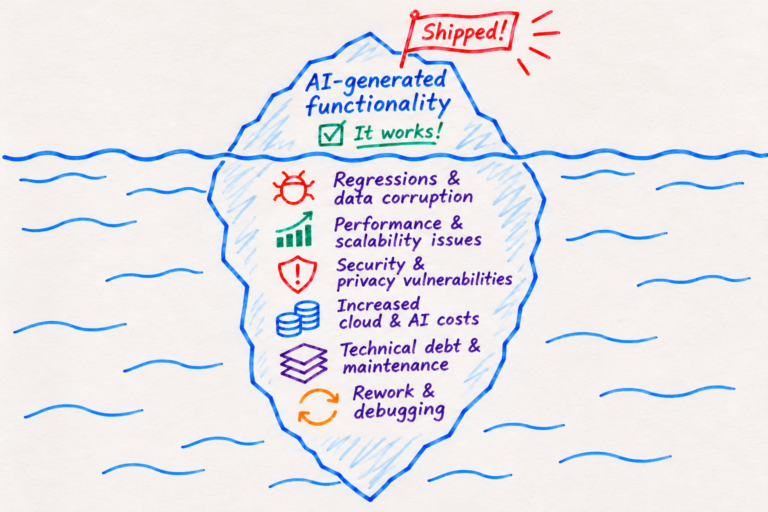
AI didn’t create this problem. But it makes it much easier to scale.
And that’s the danger of reporting AI productivity gains without considering their broader, long-term impact: what looks like an efficiency gain for one team may simply be shifting costs to others, potentially making the company less productive overall.